Um artigo recente da Softonic captou bem a posição do Instagram: a plataforma não desativará o conteúdo com IA, e a responsabilidade de detectá-lo recai sobre nós. Essa é uma descrição justa de todas as plataformas de consumidor agora. A marcação de água é inconsistente, os metadados de proveniência são removidos no upload, e o estado da arte em geração de imagem e texto eliminou a maioria dos sinais que costumavam ser óbvios. Os melhores apps para detectar conteúdo gerado por IA no desktop nos ajudam a tomar uma decisão sobre o arquivo à nossa frente, sem depender da plataforma.
Testamos sete apps e ferramentas web no Windows, macOS e Linux para detecção de conteúdo com IA em 2026. O escopo cobre texto, imagens, vídeo e áudio, porque conteúdo gerado por IA não é um único problema. Alguns são scanners voltados para consumidores, alguns são plataformas de moderação empresarial com camadas de API, e alguns são verificadores de proveniência que se baseiam em metadados C2PA. Escolha pelo tipo de mídia que mais frequentemente precisamos verificar.
O que procurar em um detector de conteúdo com IA
A detecção é uma chamada probabilística em 2026, não uma certeza. Os apps que a fazem de forma responsável compartilham algumas propriedades:
- Cobertura específica do modelo. Um detector que apenas identifica texto do ChatGPT perde Claude, Gemini e modelos de código aberto. Um detector que apenas identifica imagens DALL-E perde Midjourney e Flux.
- Uma pontuação de confiança calibrada, não um sim/não. Um detector que diz “IA, 62%” é honesto sobre a ambiguidade; um que diz “100% IA” em uma peça claramente humana tem um problema de falsa confiança.
- Suporte para múltiplos tipos de mídia quando a ferramenta os afirma. Um “detector de IA” que só lida com texto é um detector de texto.
- Suporte de metadados de proveniência (C2PA / Content Credentials) como um sinal de primeira classe ao lado da detecção baseada em modelo.
- Números de avaliação publicamente divulgados em benchmarks padrão (FakeBench, GenImage, DetectRL). Fornecedores que recusam publicar estão escondendo algo.
- Um fluxo de trabalho para o caso ambíguo. Uma ferramenta que sinaliza 40% de IA em um texto deve oferecer as razões e as seções que aumentaram a pontuação, não apenas o número.
Comparação rápida
| App | Melhor para | Plataformas | Plano gratuito | Preço inicial/mês | Classificação |
|---|---|---|---|---|---|
| GPTZero | Detecção de texto gerado por IA com recursos de sala de aula | Web + extensão do navegador | 5k palavras grátis | Assinatura anual modesta | 4.5 / 5 |
| Hive Moderation | Moderação multimodal empresarial com detecção de IA | API + web | Demo gratuita | Preço empresarial | 4.7 / 5 |
| AI or Not | Detecção de imagem e voz para consumidores | Web + iOS + Android | Scans limitados grátis | Assinatura mensal modesta | 4.4 / 5 |
| Content Credentials | Verificador de proveniência C2PA da CAI | Extensão Chrome + web | Totalmente gratuito | Gratuito | Padrão de referência |
| TrueMedia | Detector de deepfake de desinformação política | Web | Totalmente gratuito durante pesquisa | Gratuito | Ferramenta sem fins lucrativos |
| Sensity | Plataforma empresarial de deepfake e mídia sintética | API + painel | Demo gratuita | Preço empresarial | Referenciada pela indústria |
| Originality.ai | Detecção de texto com IA voltada para editores | Web | Créditos de teste | Assinatura anual modesta | 4.6 / 5 |
Reality Defender está incluído como opção apenas para empresas na seção como escolher.
Os apps
1. GPTZero
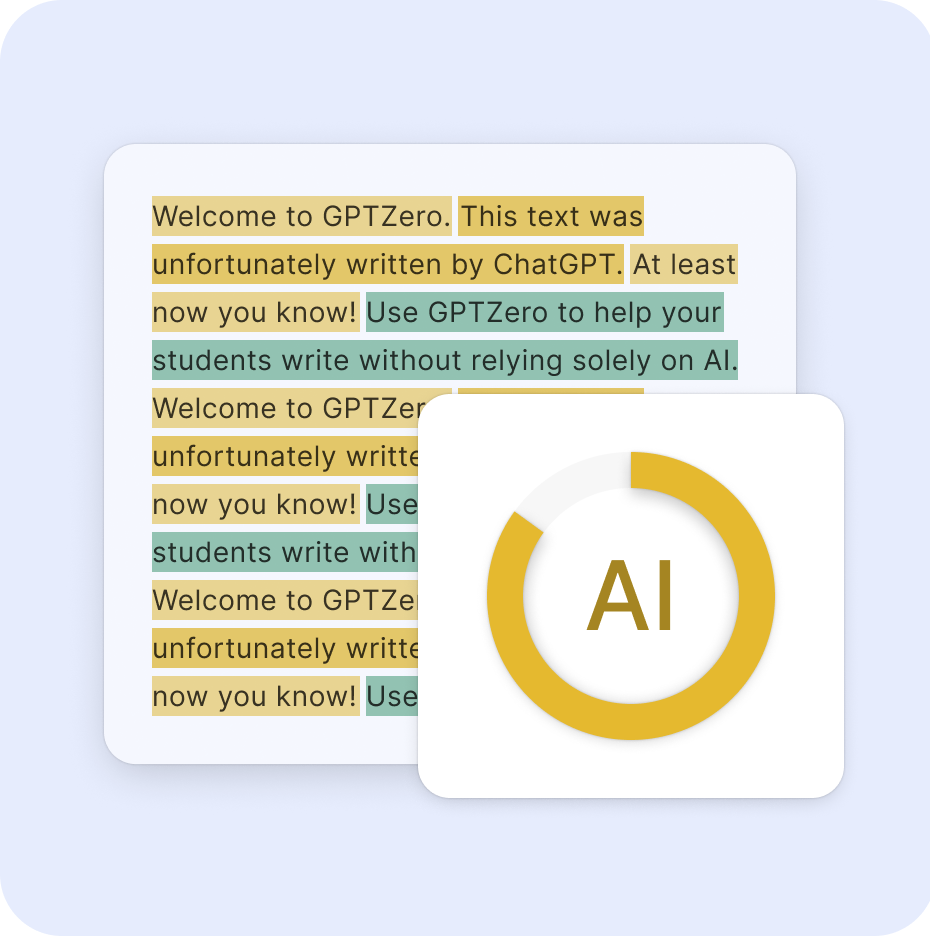
GPTZero é o detector de texto de referência para consumidores em 2026 e aquele em que a maioria dos fluxos de trabalho de sala de aula e editoriais padronizaram. Cole uma passagem, carregue um documento ou instale a extensão do navegador, e o GPTZero retorna uma probabilidade por frase de que o texto foi produzido por GPT, Claude, Gemini, Llama ou alguns modelos menores. Os recursos focados em sala de aula (histórico por aluno, integrações LMS, citação de fontes) o tornam adequado para educação K-12 e superior, bem como para editores.
Onde fica aquém: a taxa de falsos positivos em textos em inglês não nativo é um problema documentado. Qualquer decisão consequente (classificação, contratação) nunca deve depender apenas da pontuação de um detector.
Preços:
- Gratuito: 5.000 palavras por mês, usuário único
- Pago: assinatura anual modesta para contagens de palavras e histórico maiores
Plataformas: Web, extensão Chrome e Edge, aplicativos iOS e Android
Download: GPTZero
Conclusão: a escolha para um detector de texto para consumidor ou sala de aula com histórico comprovado.
2. Hive Moderation
Hive Moderation é a plataforma de moderação empresarial que Reddit, Kick e várias redes sociais usam para sinalização de conteúdo gerado por IA junto com seus fluxos de trabalho padrão de confiança e segurança. A API Hive AI Detection aceita imagem, vídeo, áudio e texto e retorna uma classificação de modelo (qual gerador provavelmente produziu o arquivo) mais uma pontuação sintética. Para uma equipe de moderação em uma plataforma, Hive é a API de referência.
Onde fica aquém: é uma API paga. O acesso do consumidor é através da página de demo em vez de uma assinatura. A latência em vídeos muito grandes é real.
Preços:
- Gratuito: demo web
- Pago: preço empresarial baseado em volume
Plataformas: API REST + console web
Download: Hive Moderation
Conclusão: a escolha quando a carga de trabalho é confiança e segurança em escala de plataforma.
3. AI or Not
AI or Not é o detector de imagem e voz voltado para consumidores que surgiu de uma ferramenta apenas para imagem e agora também lida com voz sintética. Carregue uma imagem ou clipe de voz e o aplicativo retorna uma probabilidade e um mapa de calor por região destacando as partes que aumentaram a pontuação. A extensão Chrome é a forma mais rápida de verificar uma imagem bem onde a vemos.
Onde fica aquém: o detector é mais forte em imagens do que em voz, e detecção de voz é o problema mais difícil em 2026. Algumas imagens Midjourney V7 com pós-processamento cuidadoso ainda passam.
Preços:
- Gratuito: scans limitados por dia
- Pago: assinatura mensal modesta para volume maior e histórico
Plataformas: Web, iOS, Android, extensão Chrome
Download: AI or Not
Conclusão: a escolha para verificação de imagem e voz para consumidor com fluxo de trabalho web rápido.
4. Content Credentials
Content Credentials é o verificador de proveniência da Coalition for Content Provenance and Authenticity (C2PA). Ele lê metadados assinados por C2PA de uma imagem, vídeo ou arquivo de áudio e mostra toda a cadeia de edições: qual câmera o capturou, quais aplicativos o modificaram e se alguma geração ou manipulação por IA foi declarada. Photoshop, Adobe Camera, Sony Alpha e Leica iniciaram suporte a C2PA; mais plataformas estão chegando.
Onde fica aquém: verificação de proveniência é útil apenas quando a fonte forneceu os metadados. Qualquer arquivo que tivera seus dados C2PA removidos (como a maioria das plataformas sociais faz no upload) retorna “nenhuma credencial encontrada”, o que é não informativo em vez de tranquilizador. Proveniência é o teto, não o piso.
Preços:
- Gratuito: totalmente gratuito, padrão da indústria
- Pago: sem camada paga
Plataformas: Web + extensão Chrome
Download: Content Credentials
Conclusão: a escolha para verificar proveniência declarada, especialmente em arquivos de fontes participantes.
5. TrueMedia
TrueMedia é o detector de deepfake sem fins lucrativos focado em desinformação política. Carregue um clipe de um político, o vídeo de um tweet viral ou uma gravação de chamada robótica, e o TrueMedia executa através de um conjunto de classificadores de imagem, áudio e sincronização labial e retorna uma “pontuação de manipulação”. A ferramenta é gratuita durante a fase de pesquisa, que a organização estendeu através do ciclo eleitoral atual.
Onde fica aquém: está limitado a uso político e mídia social. Arquivos gerais de consumidor (uma foto que suspeitamos ser arte gerada por IA) recebem um sinal, mas não é o alvo principal.
Preços:
- Gratuito: totalmente gratuito durante o programa de pesquisa
- Pago: sem camada paga
Plataformas: Web
Download: TrueMedia
Conclusão: a escolha para vídeo político suspeito, especialmente candidatos deepfake.
6. Sensity
Sensity é uma das plataformas de deepfake empresariais mais antigas e seu mecanismo de detecção cresceu para cobrir a onda atual de vídeo generativo, clonagem de voz e imagens manipuladas. O painel é voltado para equipes de fraude, KYC e moderação de conteúdo; a API retorna classificações de modelo e overlays forenses.
Onde fica aquém: é apenas para empresas e precificado de acordo. Usuários individuais não podem acessar automaticamente.
Preços:
- Gratuito: demo sob solicitação
- Pago: preço empresarial
Plataformas: API REST + painel
Download: Sensity
Conclusão: a escolha para uma equipe de KYC ou fraude que precisa de detecção de mídia sintética no pipeline.
7. Originality.ai
Originality.ai é o detector de texto com IA voltado para editores, marqueteiros e agências de conteúdo. Sua pontuação é mais conservadora que GPTZero em texto em inglês não nativo, e sua verificação de plágio é executada ao lado do detector de IA em uma única passagem. O fluxo de trabalho focado em editor (scanning em massa, assentos de equipe, integrações Zapier e CMS) é o diferencial.
Onde fica aquém: é apenas texto. O detector tem a mesma ressalva “nenhum detector é definitivo” que todos na lista.
Preços:
- Gratuito: créditos de teste
- Pago: assinatura anual modesta com pacotes de crédito
Plataformas: Web
Download: Originality.ai
Conclusão: a escolha para equipes editoriais que precisam de scanning em massa de texto com IA com verificação de plágio na mesma execução.
Como escolher o detector certo de conteúdo com IA
- Se precisarmos verificar texto (ensaios, artigos, cópia de marketing): GPTZero para sala de aula e consumidor, Originality.ai para equipes editoriais.
- Se precisarmos verificar uma imagem ou clipe de voz que vimos online: AI or Not ou demo Hive Moderation.
- Se precisarmos verificar proveniência declarada: Content Credentials.
- Se o arquivo for um vídeo político: TrueMedia.
- Se executarmos uma equipe de moderação em uma plataforma social: Hive Moderation ou Sensity.
- Se executarmos detecção de KYC ou fraude: Sensity ou Reality Defender (apenas para empresas, vale a conversa de vendas para serviços financeiros).
A abordagem mais forte de 2026 para a maioria das pessoas é uma combinação de verificação C2PA (Content Credentials) como primeira verificação em qualquer arquivo que possa ter proveniência, mais um classificador geral (AI or Not, Hive ou GPTZero para texto) como um sinal secundário. Não use a pontuação de um único detector para tomar uma decisão consequente — combine com revisão humana.
Perguntas frequentes
Qual é a precisão dos detectores de conteúdo com IA em 2026? Os detectores de melhor classe relatam precisão no intervalo de 85–95% em benchmarks públicos. A precisão no mundo real é menor, especialmente em texto em inglês não nativo, em escrita com IA parafraseada e em imagens geradas pelos modelos mais recentes. A pontuação de um detector é um sinal, não um veredicto.
Existe um detector de conteúdo com IA gratuito? Sim. GPTZero tem uma camada gratuita para texto, AI or Not tem uma camada gratuita limitada para imagens e voz, Content Credentials é totalmente gratuito para verificação de proveniência e TrueMedia é gratuito durante sua fase de pesquisa.
Posso detectar imagens com IA do Midjourney ou Flux? A geração atual de detectores de imagem (Hive, AI or Not) reconhece saídas Midjourney V7 e Flux em uma taxa significativa, mas não perfeitamente. Uma passagem de edição cuidadosa ainda pode enganar o classificador. Combine com verificação de proveniência.
O Instagram ou TikTok sinalizam conteúdo com IA automaticamente? Ambas as plataformas começaram a rotular conteúdo com IA declarado, mas nenhuma executa detecção universal em uploads. A abordagem do Instagram é baseada em declaração de usuário e proveniência em vez de baseada em modelo. O artigo da Softonic que citamos sinalizou isso como uma lacuna.
Qual é o melhor detector de conteúdo com IA para professores? GPTZero e Originality.ai ambos têm fluxos de trabalho de sala de aula e editoriais. GPTZero foi mais amplamente adotado em educação K-12 e superior. Nenhum deve ser a única base para uma decisão acadêmica.
Os detectores de conteúdo com IA funcionam em texto traduzido? A qualidade de detecção cai em texto traduzido, especialmente quando um modelo de linguagem estava envolvido na tradução. Detectores não distinguem texto traduzido por IA de texto escrito por IA de forma confiável. Revisão humana importa mais aqui do que em cenários monolíngues.